Why fit matters more than the number
A bra size is a starting point. The number on the tape and the letter on the label tell you where to begin, and then the bra itself has the final word. Two brands can label the same cup differently. Two styles from one brand can fit differently. Even one style can change between seasons.
So when you try a bra, ignore the label for a minute and check the fit. Four points cover nearly every problem. Do them in this order, because the band affects everything after it.
Before you start, put the bra on properly. Fasten it on the loosest hook. Lean forward slightly and use the opposite hand to bring all the breast tissue from the side and underneath into each cup, then stand up straight. Fitters call this the swoop and scoop. Without it, almost any cup looks too small.
Point 1: the band
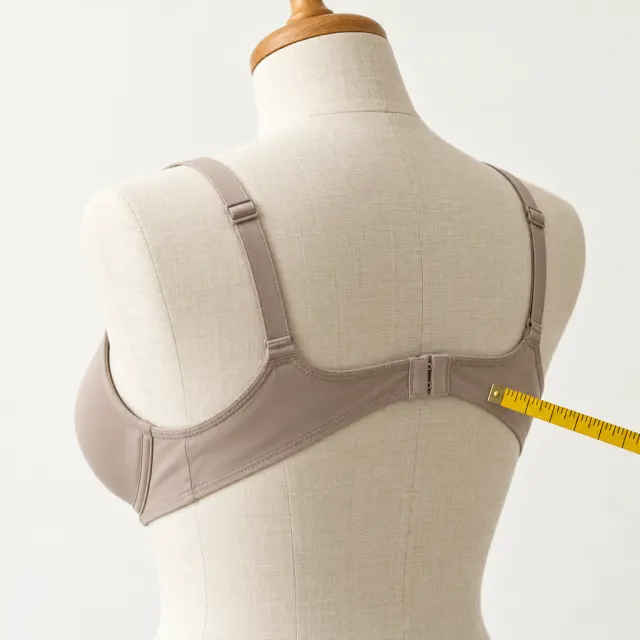
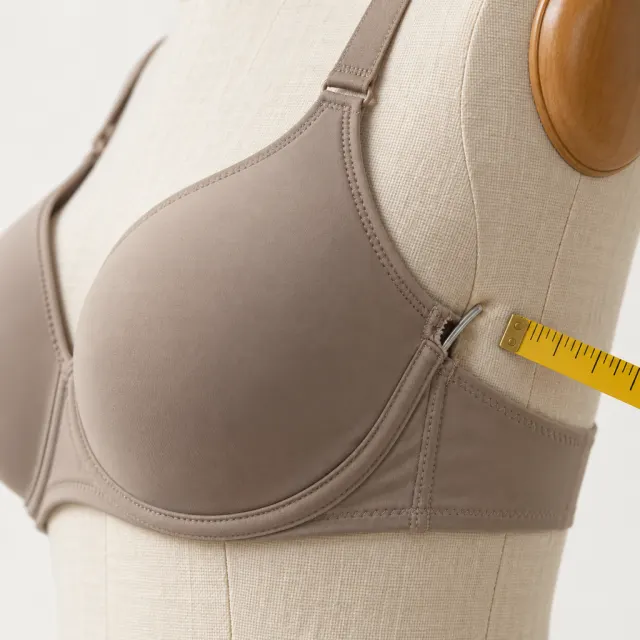
The band does most of the supporting work. A good band:
- sits level all the way round, at the same height front and back
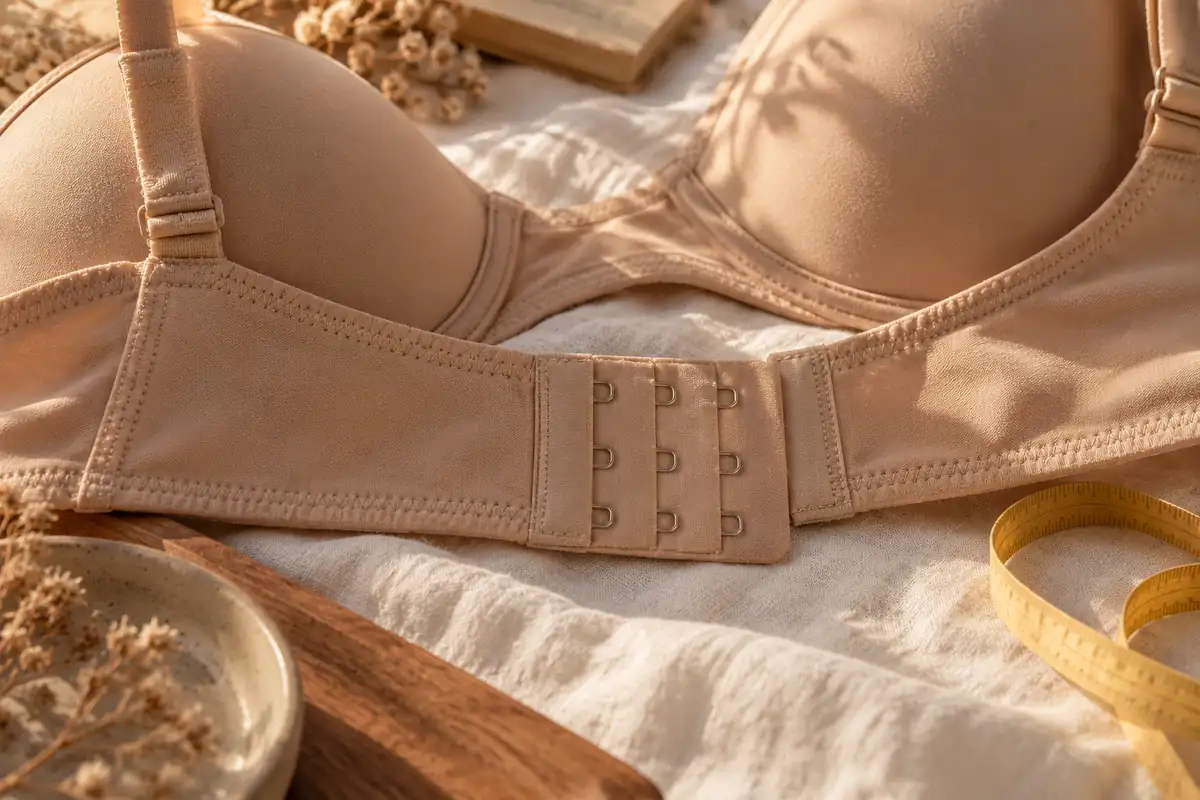
- feels firm on the loosest hook
- stays in place when you lift your arms over your head
If the band rides up at the back, it is too loose. The fix is a smaller band, usually with the cup one letter larger to keep the same cup volume. That pair of sizes is called a sister size: a 36C becomes a 34D.
If the band digs in hard on the loosest hook, it may be too small. Go up one band and down one cup letter. Allow for a short break-in period on a new bra, because firm elastic often eases a little in the first few wears.
Point 2: the cups
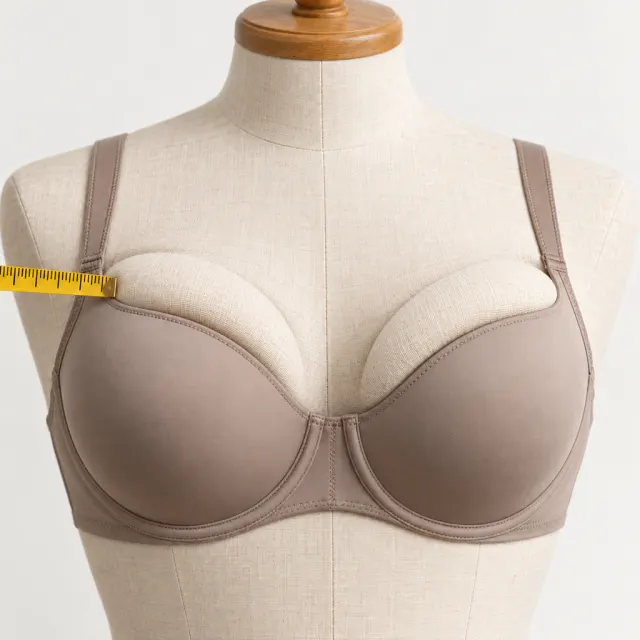
The cups should hold all the breast tissue with a smooth line at the top and sides.
- Spill over the top or sides. The cups are too small. Go up one cup on the same band.
- Wrinkles or gaps. The cups may be too big. Try one cup smaller. If gaps remain, the cup shape may not suit your shape.
- Gaps at the top only. This is often a shape issue rather than a size issue. A balconette or a cup with a lower neckline may sit better.
Molded foam cups have a fixed shape, so they gape on anyone whose shape differs from the mold. Unlined, seamed cups are built from several panels and follow natural shapes more closely. If molded bras always gape on you in every size, switch styles before switching size.
The underwire, if there is one, should sit on the ribcage around the breast, not on breast tissue. A wire that pokes at the side or sits on the breast usually means the cup is too small or too narrow.
Point 3: the center gore
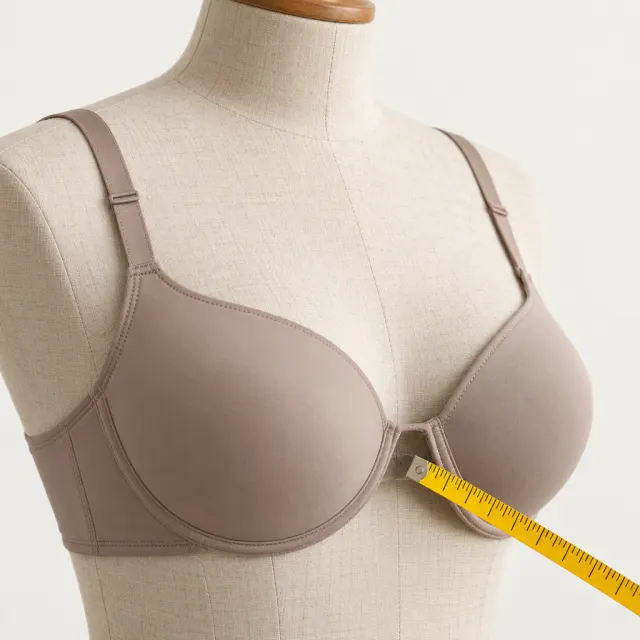
The gore is the small panel between the cups at the front. On most underwire bras, it should lie flat against the breastbone.
If the gore lifts away, the cups are usually too small or too shallow, so the breast pushes the wires forward. Go up a cup, or try a style with more depth. A loose band can cause the same lift, so recheck point 1.
Some styles are designed not to touch, such as many plunge bras on fuller busts and most bralettes. For those, check that the gore sits close and stays put when you move.
Point 4: the straps
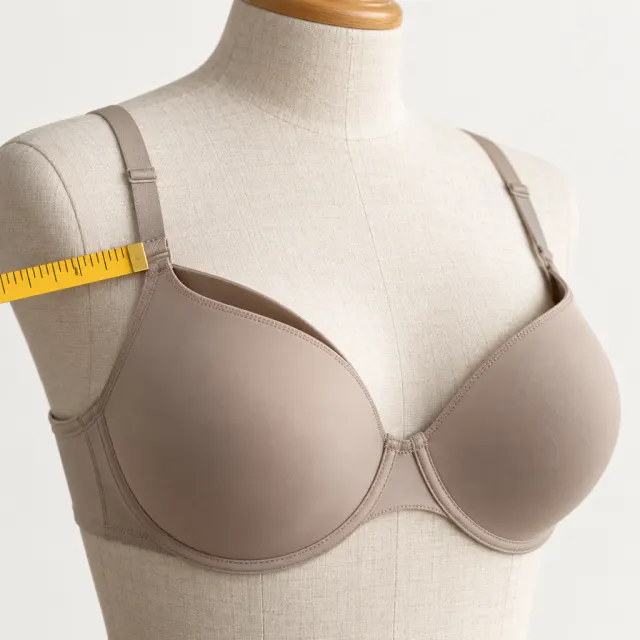
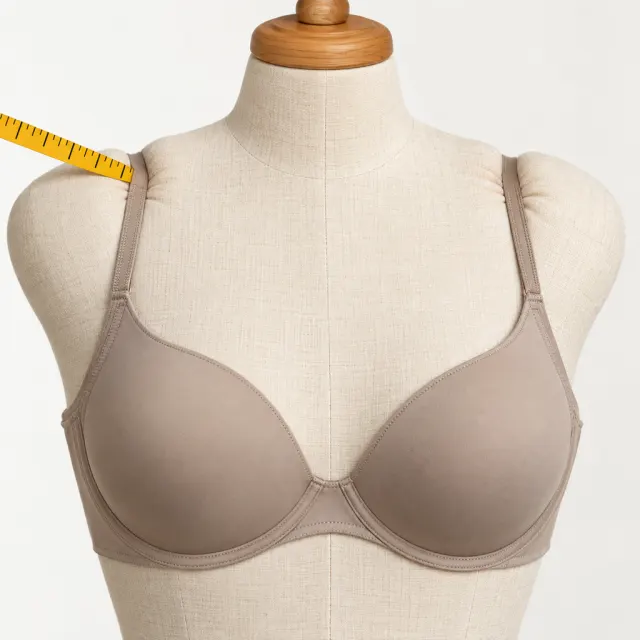
Straps steady the cups. They should not carry the weight. You should be able to slide two fingers under each strap at the shoulder.
- Straps dig in. They are probably doing work the band should do. Loosen them a little and look again at the band. Often a smaller, firmer band is the real fix.
- Straps slip off. Shorten them first. If they still slip, the band may be too big, or the straps may be set wider than your shoulders. A style with closer-set or racerback straps can help.
After any strap adjustment, lift your arms and move your shoulders. Nothing should shift much.
A quick troubleshooting list
- Band rides up: smaller band, one cup larger.
- Band too tight on the loosest hook: one band larger, one cup smaller.
- Cups spill: one cup larger, same band.
- Cups wrinkle or gape: one cup smaller, or a seamed, unlined cup.
- Gore lifts: one cup larger or a deeper cup, then check the band.
- Straps dig: firmer band, straps a little looser.
- Wire pokes at the side: larger or wider cup.
Change one thing at a time. If you change band and cup at once without meaning to, you can end up two steps away from the size you needed.
Check the fit in clothes too
A bra that passes all four points in the mirror should also look right under a fitted t-shirt. Look for lines at the top of the cup and bumps at the sides or back. Sit down, reach forward and turn. A good fit should stay put through ordinary movement.
The neckline matters too. A plunge suits a deep V. A balconette suits a wide or square neckline. A smooth, molded t-shirt bra suits fitted knitwear. The types of bras guide covers which shape suits which outfit.
Where to get fitted
You can run the four checks yourself. A fitting is worth it when a size keeps failing them, or when you want to try many shapes in one go. These are the usual options.
- Specialist lingerie shops. Independent boutiques usually carry the widest run of bands and cups, including small bands and letters above DD. Fitters there often bring several styles in your size and its sister sizes, not just one bra.
- Department stores. Many have a lingerie department with fitting rooms and staff who measure. The range is wider in some cups than others, so a fitting there may stop at the largest size the store stocks.
- Brand stores. A brand’s own shop fits you to that brand’s cuts. That is useful if you like the brand, less so as a general answer to your size.
- Video or online fittings. Some retailers offer a fitting over video, or a questionnaire about how your current bras fit. They work best if you already know your measurements.
- At home. Two measurements and the bra size calculator give you a starting size in a minute. Then run this four-point check on every bra you try.
Before you go:
- wear a well-fitting, unpadded bra and a fitted top;
- ask to try the sister sizes as well as the size you are given;
- treat the measured size as a starting point.
A good fitter checks the bra on your body, not just the tape. You can say no to anything that fails the four checks, even if it is the size the tape gave.
When to measure again
If more than one point fails and sister sizes do not fix it, measure again. Weight changes, hormones, pregnancy, breastfeeding and age can all change size, and fitting guides suggest checking every 6 to 12 months. The how to measure bra size guide takes two minutes.
For the gift buyer
If you are buying a bra as a gift, you cannot run this check for her, and that is the main reason structured bras are risky as a surprise. A wireless bralette sized S, M or L has no band or cup to get wrong. If you do buy a structured bra, keep the tags and receipt and choose a store with an easy exchange policy. The gift guide covers safer options.
Old bras tell you something too
Bras wear out. Bands lose their stretch and end up on the tightest hook. If an old favorite now rides up, it may not mean your size changed. It may mean the bra is tired. Compare it with a newer bra in the same size before you buy a smaller band.
Some fit problems come from shape rather than size. If the center doesn’t lie flat because of space between the breasts, read bras for wide-set breasts; if one cup fits and the other doesn’t, see bras for uneven breasts. A band that rides up on the tightest hook usually means the elastic is worn out: how long bras last.
Sources & method: sizing rules follow the standard band-and-cup system used by UK, US, AU and EU brands, checked against fitting guides from specialist retailers and fitting communities. How we work.