Bra size changes more during pregnancy and breastfeeding than at almost any other time. This guide covers when to buy, how to measure and what to look for. It is general fitting advice: for pain, redness or a lump in the breast, talk to your midwife, doctor or a lactation consultant.
How size changes, stage by stage
- Pregnancy: breasts often grow by one to three cup sizes, and the band can grow by one or two sizes as the ribcage widens.
- When milk comes in (usually two to five days after birth): a temporary fullness can add another cup or more.
- The first weeks of feeding: size usually settles between about two and eight weeks after birth.
- After weaning: size changes again. It may not go back to exactly where it was.
When to buy
- Maternity bras (for pregnancy): when your usual bras feel tight, often around weeks 12 to 16.
- Nursing bras (with clips that open for feeding): late in pregnancy. Most advice sits between 32 and 38 weeks, when the size is closest to what you’ll need after birth.
Sources disagree on how many to buy before birth. A common middle path: two or three before the birth, and the rest once your size settles a few weeks later.
How to measure for a nursing bra
Measure the same way as for any bra, wearing a thin unpadded bra:
- Band: snug around the ribcage, just under the bust.
- Bust: loosely around the fullest part.
- Leaning bust if your breasts are soft or heavy. See measuring without a bra.
Enter the numbers into the bra size calculator. Then allow room in the cup: choose a stretch or soft cup, or one cup size up, for the fullness when milk comes in. If the band feels tight late in pregnancy, a bra extender that adds hooks is cheaper than a new bra.
Tightest hook or loosest?
Sources disagree. Some say fit a pregnancy bra on the tightest hook, so the band can loosen as your ribcage grows. Others say fit a nursing bra on the loosest hook, so it can tighten as your ribcage settles after birth. A sensible rule: buy for the stage you are in. Before birth, leave room to loosen; after birth, leave room to tighten.
What to look for
- Wire-free first. Pressure on the breast can contribute to blocked ducts, so soft or wire-free bras are the usual advice in the early weeks. Some sources say a well-fitted flexible wire is fine later on; the real risk is any bra that presses in one spot.
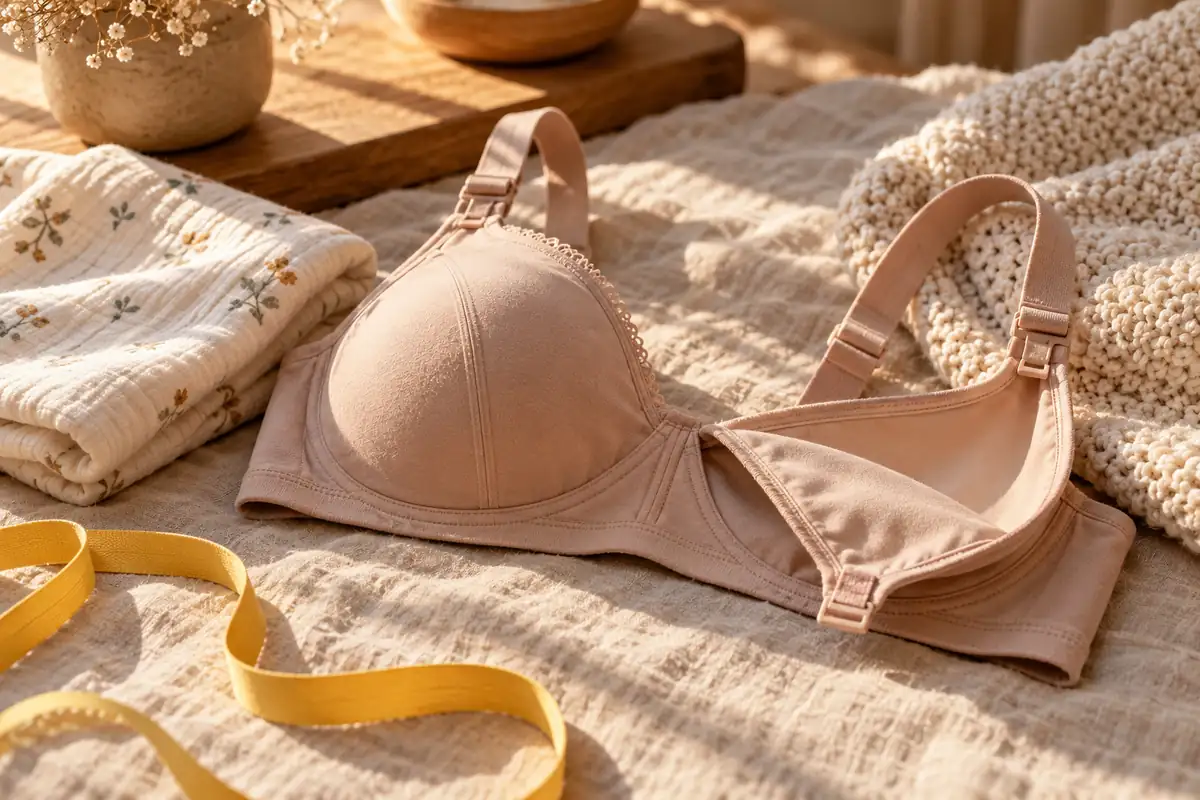
- One-handed clips at the top of the straps, so you can open a cup while holding the baby.
- Stretch in the cups to cope with fullness that changes through the day.
- A wide, soft band that stays level without digging.
- A sleep bra: a soft crossover or crop style with no hooks, to hold breast pads at night.
How many
Three to five is the common advice: one on, one in the wash, one spare, plus a sleep bra. Leaks and frequent feeds mean more washing than usual.
Checking the fit
The four-point fit check still applies, with one addition: run a finger around the edge of each cup. Nothing should press into the breast at any point. A cup that digs in is a size problem to fix now, not later.
When you stop breastfeeding, measure again after a few weeks. The size that fit before pregnancy may not be the size that fits now.
Sources & method: sizing rules follow the standard band-and-cup system used by UK, US, AU and EU brands, checked against fitting guides from specialist retailers and fitting communities. How we work.